
You're probably here because you have one of these people in your life: the friend whose camera roll is mostly cat photos, the sibling who says “my child” and means a tabby, or the coworker whose mug, tote bag, phone case, and holiday cards all feature whiskers.
And now you need a gift.
That sounds easy until you start shopping. Then it turns into a swamp of cheesy cat puns, ugly novelty socks, random trinkets, and products that scream “I panicked and typed gifts for cat lovers into a search bar.” The problem usually isn't lack of options. It's too many bad ones.
The fix is to stop shopping by keyword and start shopping by psychology. Cat people aren't all the same. Some want stylish home pieces. Some want anything that makes their cat healthier or less bored. Some want a gift that celebrates their specific cat, not cats in general. Once you know which person you're buying for, the present gets much easier to solve.
Table of Contents
- Finding the Purr-fect Present Isn't Always Easy
- Understanding Your Target Cat Lover
- A Curated Catalog of Cat-Centric Gift Ideas
- Go Beyond Generic with Personalized Gifts
- Smart Shopping Strategies for Every Budget
- Last-Minute Lifesavers and Gifts That Keep on Giving
- Let Govava's AI Gift Wizard Find Your Perfect Match
Finding the Purr-fect Present Isn't Always Easy
A lot of gift mistakes happen for one reason. People confuse cat-themed with thoughtful.
You see a ceramic mug with a cartoon cat on it and think, close enough. But the recipient already has six mugs. Or you order a novelty T-shirt that would've been funny for five minutes in 2018. Or you buy a toy for the cat that looks cute in the product photo and gets ignored the second it lands on the floor.
That's why shopping for gifts for cat lovers feels weirdly hard. You're not just buying for a hobby. You're buying for a relationship. The bond between a cat person and their cat is usually emotional, specific, and closely tied to routine. If your gift doesn't fit that world, it feels off.
Practical rule: If the gift could work just as well for “someone who vaguely likes cats,” it's probably too generic.
The better move is to ask a sharper question. Not “What do cat lovers like?” Ask, “How does this person express their cat obsession?”
That changes everything.
Some people want sleek, design-forward pieces that happen to involve their cat. Some want anything that improves the cat's daily life. Some want to laugh. Some want to memorialize their pet's face on every object they own. Those are very different shopping missions, and they lead to very different wins.
A good gift in this category usually does one of three things:
- Reflects identity: It matches how they see themselves as a cat person.
- Improves daily life: It helps the cat or makes care easier.
- Feels specific: It clearly belongs to their cat, not some imaginary internet cat.
Once you shop with that filter, the clutter clears fast.
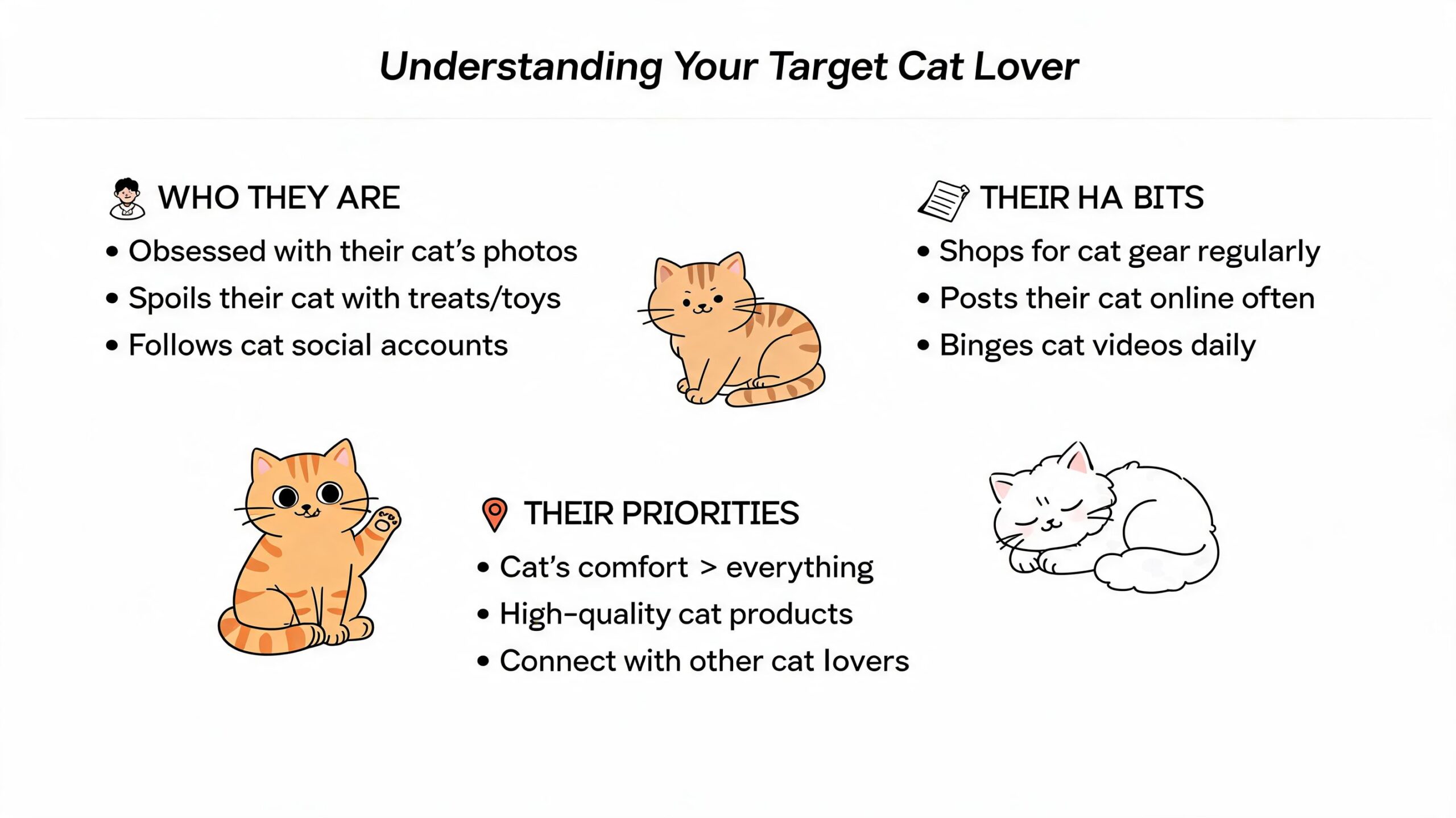
Understanding Your Target Cat Lover
Many readers don't need more options. They need a cleaner way to decide.
That starts with admitting that “cat lover” is a lazy category. It hides the actual motives behind what people enjoy, display, collect, and spend on. In the U.S., cats were present in about 46.5 million households, and Americans spent $136.8 billion on pets in 2022, up from $123.6 billion in 2021, according to Data Axle's look at cat and dog ownership and spending. This is a huge, established buying category, not a niche full of gag gifts.
Why generic cat gifts miss
The average “cat gift” roundup tends to dump everything into one pile. Socks. Toys. Pillows. Mugs. Maybe a candle. That's not helpful because it ignores taste, lifestyle, and emotional triggers.
A minimalist apartment dweller doesn't want a loud novelty sign. A rescue volunteer may care more about mission-driven gifts than cute accessories. A person who worries about hydration, stress, and enrichment will light up over useful gear and shrug at decorative junk.
So shop by type.
Four cat lover archetypes that actually help
The Chic Cat Parent
This person likes cats, but they also like restraint. Their home is clean, their shelves are intentional, and they don't want anything that looks like it came from a clearance bin at a tourist shop.
Buy sleek cat jewelry, framed line-art prints, sculptural cat bookends, neutral throw pillows with subtle feline motifs, or modern cat furniture that blends into the room. Skip anything with giant cartoon eyes or loud slogans.
The Rescue Advocate
Their love of cats is tied to care, ethics, and action. They probably know local shelters by name and have opinions about fostering, trap-neuter-return, or senior cat adoption.
Good picks include a shelter donation in their name, a pet-sitting gift card if they foster or travel for rescue work, practical home gear for their animals, or custom art featuring a rescue cat they adore. This person values meaning over flash.
The Meme Lord
They're here for chaos. Their cat has a ridiculous nickname and a running group chat presence. Humor works, but only if it's smart.
Think custom socks with the cat's face, a niche cat meme desk accessory, absurd but well-made mugs, or a digital illustration that captures the cat's weirdest expression. Low-effort joke gifts fall flat. Specific humor wins.
Buy the gift that sounds like an inside joke, not the one that sounds like a search term.
The Worried Well-nester
This is the person who reads labels, checks ingredients, and wants the cat to be hydrated, enriched, calm, and mentally stimulated. They care about function.
Look for puzzle feeders, filtered water fountains, calming tools, quality grooming gear, or anything that supports healthy routines. They don't want fluff. They want something that helps.
If you can name your recipient in one of those four buckets, you're already ahead of most gift shoppers.
A Curated Catalog of Cat-Centric Gift Ideas
This category is bigger than many people realize. Cat-related gifting sits inside a real consumer market, not a tiny novelty corner. That's why the good stuff exists if you know where to look.
Start broad, then get picky.
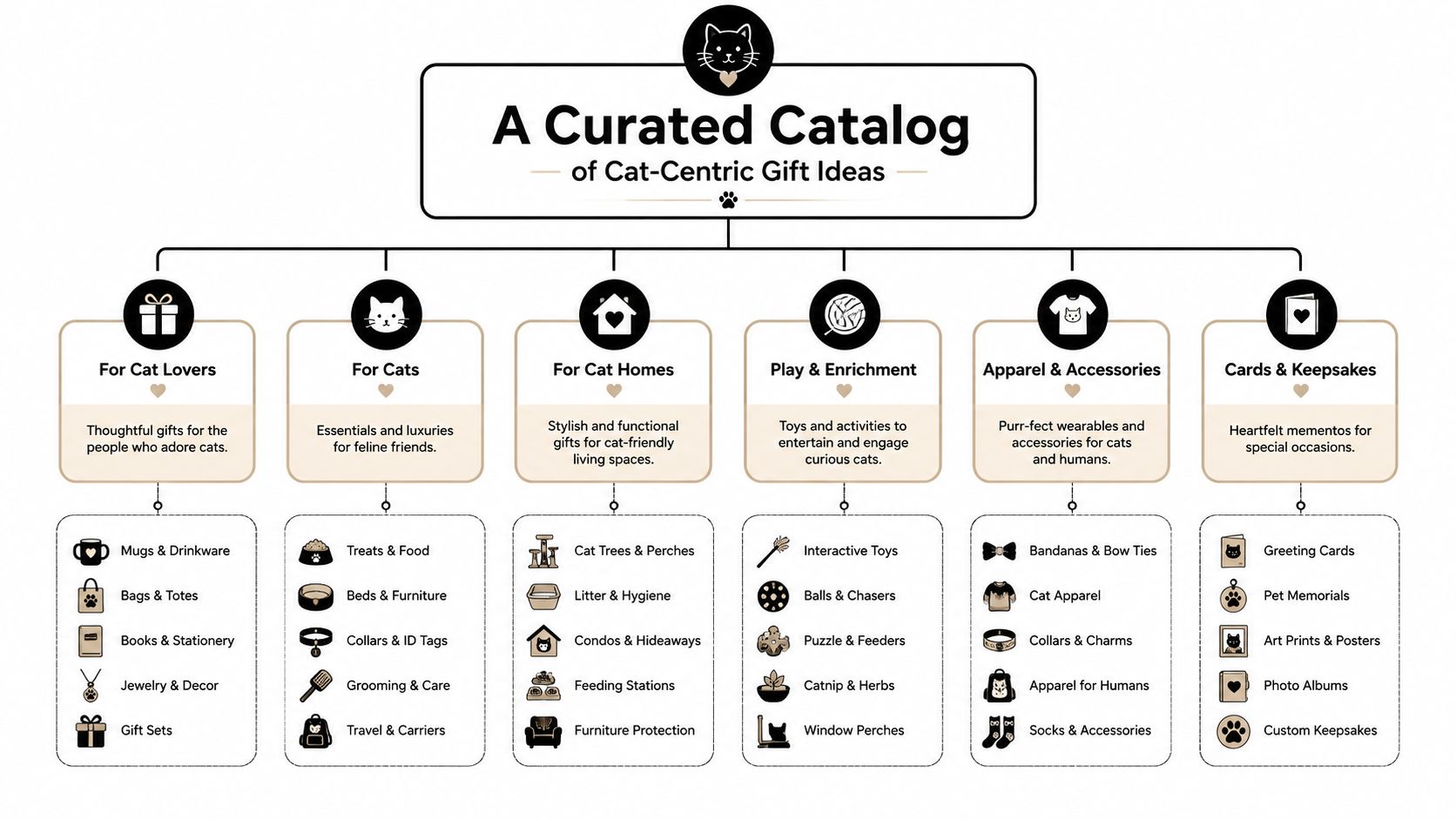
Gifts for the human
These work best when the recipient wants to wear or display their cat loyalty without turning into a walking novelty shop.
- Subtle jewelry: A small cat silhouette necklace, engraved paw-print pendant, or simple ring works for people who want something personal but polished.
- Better mugs: Not every mug deserves to be gifted. Look for one with clean design, good proportions, and humor that isn't trying too hard.
- Wearable custom pieces: Embroidered sweatshirts with the cat's outline, face-print socks, or a tasteful tote bag can land really well.
- Books and stationery: Cat-themed desk accessories, notebooks, or art books are safe and useful, especially for coworkers and acquaintances.
Gifts for the cat
If the cat's happiness is the point, stay practical.
Consumer Reports includes cat puzzles and feeders among strong gift types for cat owners in its gift guide for cat lovers. That's the right instinct. Functional items beat random plush toys most of the time because they frequently get used.
Look for:
- Puzzle feeders: Great for food-motivated cats and indoor cats that need more activity.
- Treat mazes and slow feeders: Better than gulp-and-go bowls.
- Cat tunnels: Cheap, fun, and surprisingly effective.
- Window perches and beds: Excellent for nap-heavy, bird-watching households.
- Filtered water fountains: Smart for the health-focused cat parent.
- Designer scratching posts: Useful, and they don't have to be ugly.
Gifts for their home
A cat person's home often doubles as a cat habitat. Good gifts acknowledge that reality without making the space feel juvenile.
Consider framed pet portraits, modern cat shelves, washable throws that can survive fur, sculptural scratching furniture, or pet-safe candles for homes that constantly smell faintly of litter and optimism. Home gifts do well when they solve a problem and look good while doing it.
Gifts as an experience
Experience gifts are underrated here.
A cat café voucher, professional pet photography session, digital art commission, pet-sitting credit, or a donation to a rescue in their name can feel more personal than another object. This is especially useful when the person already owns every obvious cat accessory.
Here's the fast filter I use:
| Gift direction | Best for | Why it works |
|---|---|---|
| Wearable cat gift | Close friends, siblings | Personal but easy to use |
| Cat enrichment item | Dedicated pet parents | Improves the cat's routine |
| Home decor piece | Style-conscious recipients | Feels grown-up, not gimmicky |
| Experience gift | Hard-to-shop-for people | Memorable and less cluttered |
If you're stuck, choose utility first, aesthetics second, novelty last.
Go Beyond Generic with Personalized Gifts
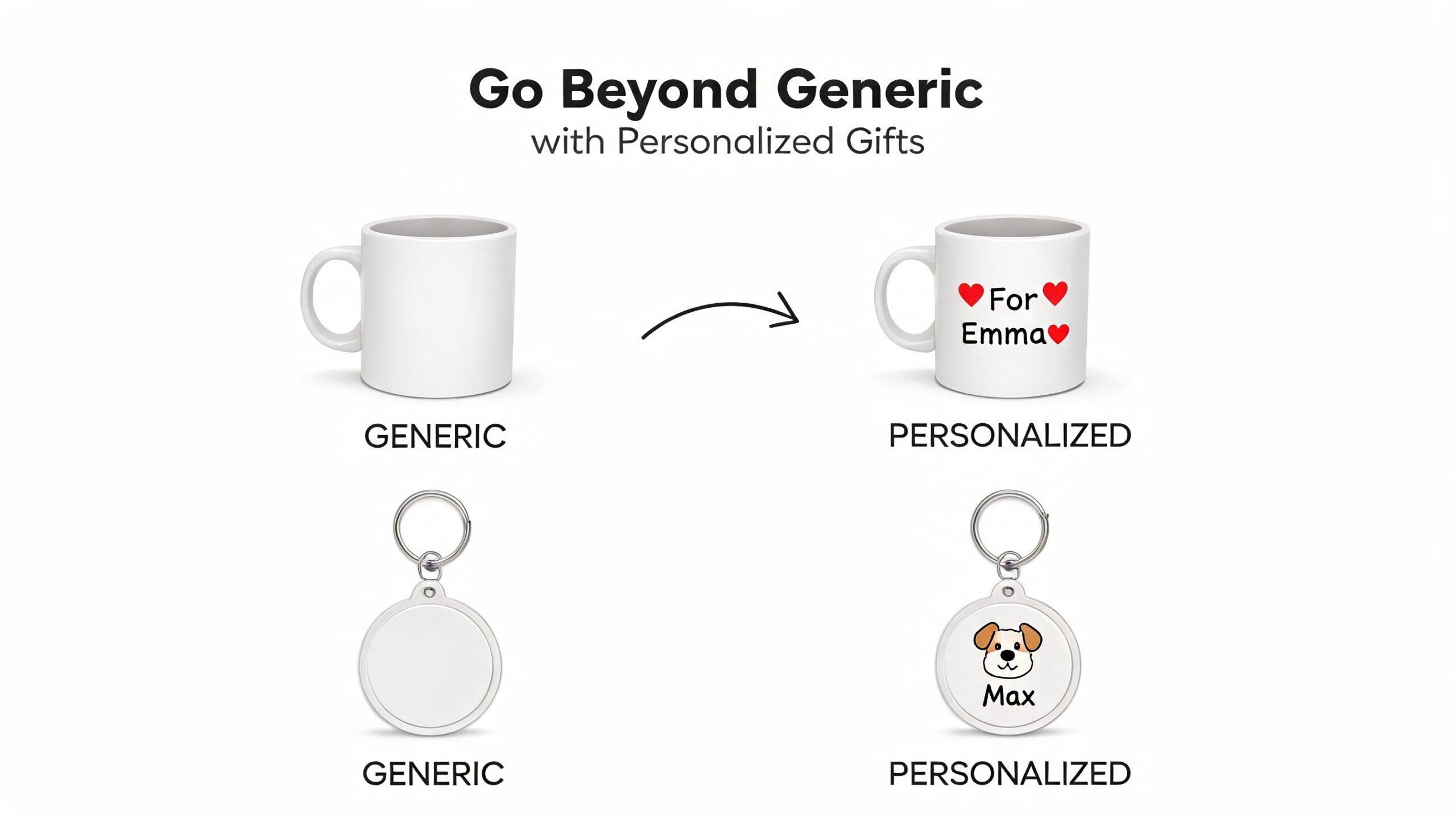
The fastest way to make gifts for cat lovers feel thoughtful is to stop buying for “a cat person” and start buying for their cat.
That difference matters. A generic cat mug says, “I know you like cats.” A custom portrait of their one-eyed tuxedo menace says, “I know who matters in your house.”
Why personalization works so well
Personalization fixes the biggest weakness in this category: sameness.
Wisdom Panel highlights DNA tests and personalized accessories as top gift ideas for cat lovers in its holiday gift guide for cat parents. That tracks. These gifts feel more deliberate because they're tied to a specific pet's identity, not a generic feline aesthetic.
That identity can be emotional, visual, or practical:
- emotional, like memorial jewelry or a framed portrait
- visual, like a custom phone case with the cat's face
- practical, like a DNA kit that gives breed composition and trait insights
The more clearly the gift could only belong to their cat, the stronger it feels.
Personalized gift ideas worth ordering
Custom pet portraits
These work because they scale to almost any style. Renaissance parody, minimalist line drawing, watercolor, cartoon, noir movie poster. Pick the tone that matches the owner, not just the cat.
Face-based everyday items
Socks, mugs, blankets, keychains, ornaments, and phone cases can be great if the print quality is good. Don't cheap out here. Bad cropping ruins the joke.
Engraved keepsakes
A collar tag copy, paw-print charm, or simple necklace with the cat's name is a smart choice when you want sentimental without being oversized.
Cat DNA tests
This is an especially strong gift for the curious, detail-oriented owner. It gives them something to do, something to learn, and a result that feels personal long after the unboxing.
A small caution. Personalized gifts often fail because people order them too late, upload blurry photos, or choose novelty over usability. If you go custom, use a clear image, check production time, and ask yourself one hard question: will they want this in their home or on their body?
If the answer is yes, personalized wins almost every time.
Smart Shopping Strategies for Every Budget
You don't need a huge budget. You need standards.
A lot of bad gifts happen because shoppers panic and substitute price for thought. Expensive doesn't automatically mean good, and cheap doesn't automatically mean careless. The right move is to match the gift to the relationship, then judge it by usefulness, quality, and fit.
Match the gift to the relationship
A coworker gift should be easy, light, and low-risk. Think a tasteful mug, a small desk item, a cat-themed notebook, or a nice treat for their pet.
A close friend or partner can handle more specificity. That's where custom art, upgraded cat furniture, a DNA kit, or a well-chosen home piece makes sense.
Use this simple framework:
- For coworkers and acquaintances: Keep it universal, useful, and not too intimate.
- For close friends: Buy something that reflects personality or home style.
- For family or partners: Lean into personalization or higher-utility gear.
- For someone who already has everything: Give an experience or solve a daily annoyance.
Choose utility over clutter
Consumer Reports points toward a smart benchmark with puzzle feeders and similar functional gifts. Products that make food acquisition more cognitively demanding can extend feeding time, reduce boredom, and encourage movement. That makes them a stronger pick for indoor cats than purely decorative items, as noted earlier.
That logic applies beyond feeders.
Ask these questions before you buy:
- Will this get used weekly?
- Does it solve a problem or improve a routine?
- Is it durable enough to survive an actual cat?
- Would the owner have chosen this for themselves?
Here's a quick decision guide:
| Budget mindset | Good choice | Skip |
|---|---|---|
| Small budget | Wand toy, mini scratch pad, nice mug, custom keychain | Disposable novelty clutter |
| Mid-range | Tunnel, fountain, framed print, personalized sweatshirt | Overbuilt gadget with no clear use |
| Bigger budget | DNA kit, modern cat tree, custom art, premium bed | Huge themed decor they didn't ask for |
Quick test: If the gift is cute but creates one more thing to store, clean, or ignore, it's probably the wrong gift.
Useful gifts age well. Novelty gifts age in about a week.
Last-Minute Lifesavers and Gifts That Keep on Giving
Last-minute shopping doesn't have to look last-minute.
The trick is choosing gifts where speed feels intentional. Digital delivery, local experiences, and recurring subscriptions can save you when shipping windows are gone. They also work well for recipients who don't need more stuff piled around the house.
Fast gifts that still feel thoughtful
A digital art commission is one of the cleanest rescue moves. You can send the artist a favorite photo, get a printable file or gift note, and still look like you planned ahead.
Other strong options:
- Pet photography session gift card: Better than another frame with nothing to put in it.
- Cat café voucher: Social, fun, and easy to give.
- Pet-sitting credit: Practical, especially for busy owners.
- Streaming or course gift card: Good if the person loves cat documentaries, pet photography, or training content.
- Shelter donation in their name: Fast, meaningful, and clutter-free.
The common thread is simple. You're giving time, utility, or identity, not just an object.
Subscription boxes compared simply
Subscription boxes can be great if the cat likes trying new things. They're less great for picky cats with strict diets or owners who hate recurring clutter.
Here's the fast comparison.
| Box Name | Primary Focus | Best For |
|---|---|---|
| Toy-focused cat box | Play and enrichment items | Active cats who get bored fast |
| Treat-focused cat box | Edible surprises and snack variety | Food-motivated cats without diet restrictions |
| Wellness-focused cat box | Grooming, care, calming, or routine support | Owners who prioritize health and practical care |
If you go this route, think about the cat's actual behavior. A timid senior cat and a chaotic young climber should not get the same box.
One more smart last-minute move is to bundle a digital gift with a small physical add-on you can grab locally. A cat toy plus a printed card for a future custom portrait feels complete, even if the main gift arrives later.
That's usually all you need. A clear signal that you paid attention.
Let Govava's AI Gift Wizard Find Your Perfect Match
At some point, gift shopping stops being fun and starts becoming a filtering problem. Too many tabs. Too many mediocre options. Too many items that are almost right.
That's where a tool can help, especially if you already know the recipient's vibe but don't want to manually hunt through endless listings.
Why an AI tool fits this problem
For pet gifting, the emotional drive is real. A poll reported by Catit says that 932 of 1,123 cat owners surveyed in My Cat Magazine, or 83%, planned to buy their cat a holiday gift, and Catit also cites a 2021 Columbia Business School study saying buying gifts for pets makes people happy, even more than buying a gift of the same value for themselves or for other people, according to Catit's report on why cat lovers buy gifts.
So yes, people care. The issue isn't whether to buy. It's how to find the right thing fast.
One practical option is Govava, which uses an AI Gift Wizard to help sort gifts by recipient interests, lifestyle, and budget while also surfacing items across a large retailer network and showing available coupons. For a category like gifts for cat lovers, that's useful because it lets you search by the actual person you're buying for, not just by a broad product term.
How to use it without overthinking
Start with the recipient, not the item. Type in the traits that matter.
Try prompts like:
- Chic cat parent who likes minimalist home decor
- Funny cat-obsessed coworker under a modest budget
- Indoor-cat owner who cares about enrichment and health
- Personalized gift for someone obsessed with their black rescue cat
That kind of input is what makes the results better. You're giving the tool a real profile instead of a vague label.
Then tighten the shortlist with a few checks:
- Fit: Does this match their personality or their cat's needs?
- Use: Will it get displayed, worn, or used regularly?
- Timing: Is it available in time, especially if it's customized?
- Value: Is there a coupon or a comparable option that's smarter?
That's the whole game. Good gifting isn't magic. It's pattern recognition with decent taste.
If you want to cut the browsing chaos and get to a thoughtful answer faster, try Govava. It's a practical way to turn “they love their cat” into a gift that perfectly fits the person, the pet, and your budget.