

The gift exchange invite shows up, and the problem starts fast. You need something work-appropriate, within budget, easy to ship, and specific enough to feel thoughtful for a person you may only know from meetings, Slack threads, or a shared project board.
That's why a long list of random gift items usually fails. Coworker gift exchange ideas get better when you start with the right platform and a simple buying strategy, not with another roundup of mugs, candles, and desk clutter.
Use the platform to solve the actual constraint. Need speed and low effort? Pick a site built for fast, polished gifting. Running Secret Santa with budget rules and participant limits? Use a tool that manages the exchange itself. Buying for a remote team, a white elephant swap, or a coworker with hard-to-read taste? The best choice depends less on the item category and more on how the gift needs to be chosen, customized, sent, and received.
That practical approach matters because workplace gifting still carries social weight. As noted earlier in the article, research on workplace gift exchange found that thoughtful non-cash gifts can leave a stronger impression than cash alone. The takeaway is simple. A good coworker gift doesn't need to be expensive. It needs to feel considered without creating extra work for you.
The platforms below help you do exactly that.
Table of Contents
- 1. Govava
- 2. Elfster
- 3. Uncommon Goods
- 4. Etsy
- 5. Greetabl
- 6. Sugarwish
- 7. Knock Knock
- Coworker Gift Exchange: 7-Option Comparison
- Beyond the Platform Gift Exchange Etiquette & Tips
1. Govava
You draw a coworker's name, the budget is $25, and all you know is that they work remote, like coffee, and post dog photos in Slack. Don't start by guessing products. Start with a platform that helps you narrow the field fast.
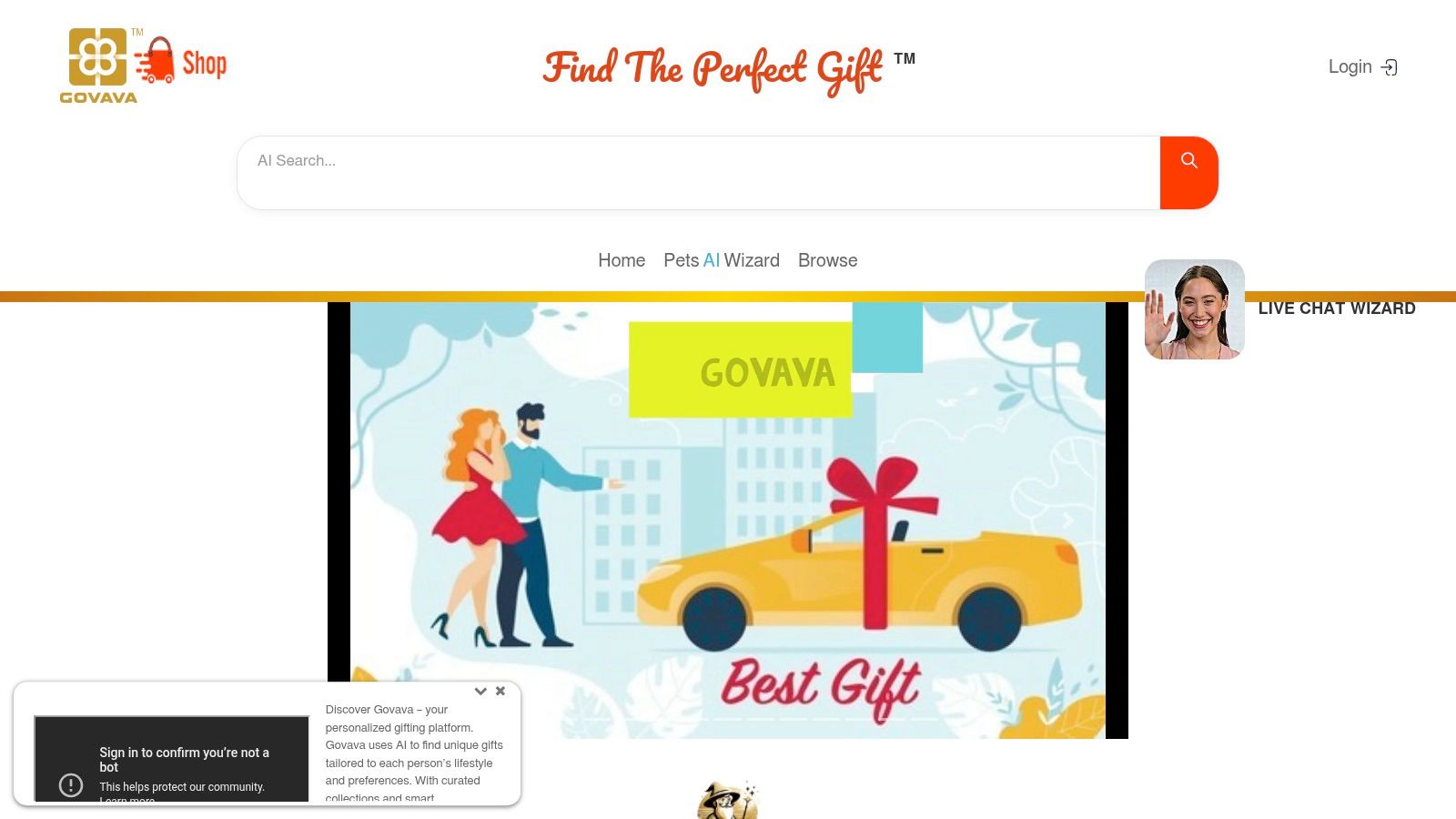
Govava is the strongest first stop if your real problem is decision fatigue. It helps you move from vague clues to usable gift options without opening a pile of retailer tabs or defaulting to a boring office-safe filler gift.
Why Govava is the fastest fix
Govava stands out because it solves the search problem first. Its AI Gift Wizard helps you sort ideas based on the recipient's preferences and lifestyle, and its Gift-Chat and Live Gift Wizard give you another layer of guidance if you still feel stuck. That makes it useful for coworker exchanges, where the goal is usually simple: get something specific enough to feel thoughtful, but neutral enough to stay professional.
It also gives you range. You can browse across categories like Apparel & Accessories, Electronics, Home & Garden, Toys & Games, and Animals & Pet Supplies. That matters in office exchanges because your recipient often comes with only a few usable signals. Dog owner. Desk plant person. Weekend hiker. That is usually all you get.
One practical feature matters more than it sounds. Govava can save picks by recipient in a Gift-Cart, which is helpful if you handle multiple exchanges or buy for coworkers, clients, and managers throughout the year. Coupon discovery also helps you stay inside a strict spending cap without dropping to low-effort gift options.
Use this rule: If you know only a few facts about your coworker, use a guided gift platform before you browse any single retailer.
Best use cases
Govava works best when shopping is the hard part, not the exchange logistics.
Use it for:
- Last-minute office swaps: You need strong options quickly.
- Hard-to-read recipients: You have a few clues but no clear gift idea.
- Budget-capped exchanges: Coupon support helps you keep a better gift under the limit.
- Repeat annual gifting: Saved recipients and organized picks cut repeat work.
It is less useful if your team first needs help running the exchange itself. Govava is a shopping and discovery tool. Use it when you want better gift matching and faster decisions.
One limitation is straightforward. Current pricing or subscription details were not clearly provided in the available materials, so check the site directly before you rely on any premium feature.
If you want my blunt recommendation, start here when the question is “What should I buy?” Govava is the best option in this list for turning weak coworker intel into a gift that feels considered, appropriate, and done on time.
2. Elfster
Sometimes the hardest part isn't the gift. It's the chaos around the exchange. Who drew whom, who forgot to submit a wish list, who ignored the spending cap, and why are three people asking if they can switch names?
That's where Elfster earns its spot. It's a free exchange platform that handles the mechanics cleanly, which makes it especially good for workplace Secret Santa setups, department swaps, and any office trying to avoid spreadsheet-induced confusion.
Use it when the exchange itself is the problem
Elfster manages name draws, wish lists, spending limits, reminders, and exclusions. If your team wants to avoid repeat pairings from last year or stop managers from drawing direct reports, those kinds of rules are exactly why you use a dedicated platform.
It also lets participants build wish lists with items from many retailers. That's useful because it reduces the chance of a total miss without killing the surprise.
If your group keeps asking logistical questions, your first tool should organize the exchange. Your second tool should help you shop.
There's a strong employee preference for actual gifts, too. A BusinessWire report on holiday gifting preferences found that 61.7% of Americans would rather receive a gift from their employer than attend an in-person holiday event with coworkers. That's a good nudge to make the exchange run well instead of treating it like throwaway office fluff.
Best for Secret Santa and rule-heavy swaps
Elfster works best for teams that need structure more than product discovery. It's not where you complete the purchase. It's where you keep the exchange from becoming annoying.
A few reasons it's useful:
- Automated pairing: No manual draw process.
- Wish lists: Better odds of buying something wanted.
- Anonymous Q&A: You can ask your recipient questions without spoiling the reveal.
- Mobile access: Helpful for teams who live on their phones.
The tradeoff is that everyone has to create an account, and purchases happen on external retailer sites. If your group hates logins, that may be friction. But for any office with more than a handful of people, Elfster removes enough admin work that it's worth it.
3. Uncommon Goods
You drew the coworker whose preferences can be summed up as “nice, normal, impossible to shop for.” Use Uncommon Goods.
This platform earns its spot because it solves a specific office gifting problem. You want something more thoughtful than a generic gift card, but you also want to avoid anything too personal, too goofy, or too risky for work. Uncommon Goods is one of the best places to shop that middle.
Best when you need a better filter, not more options
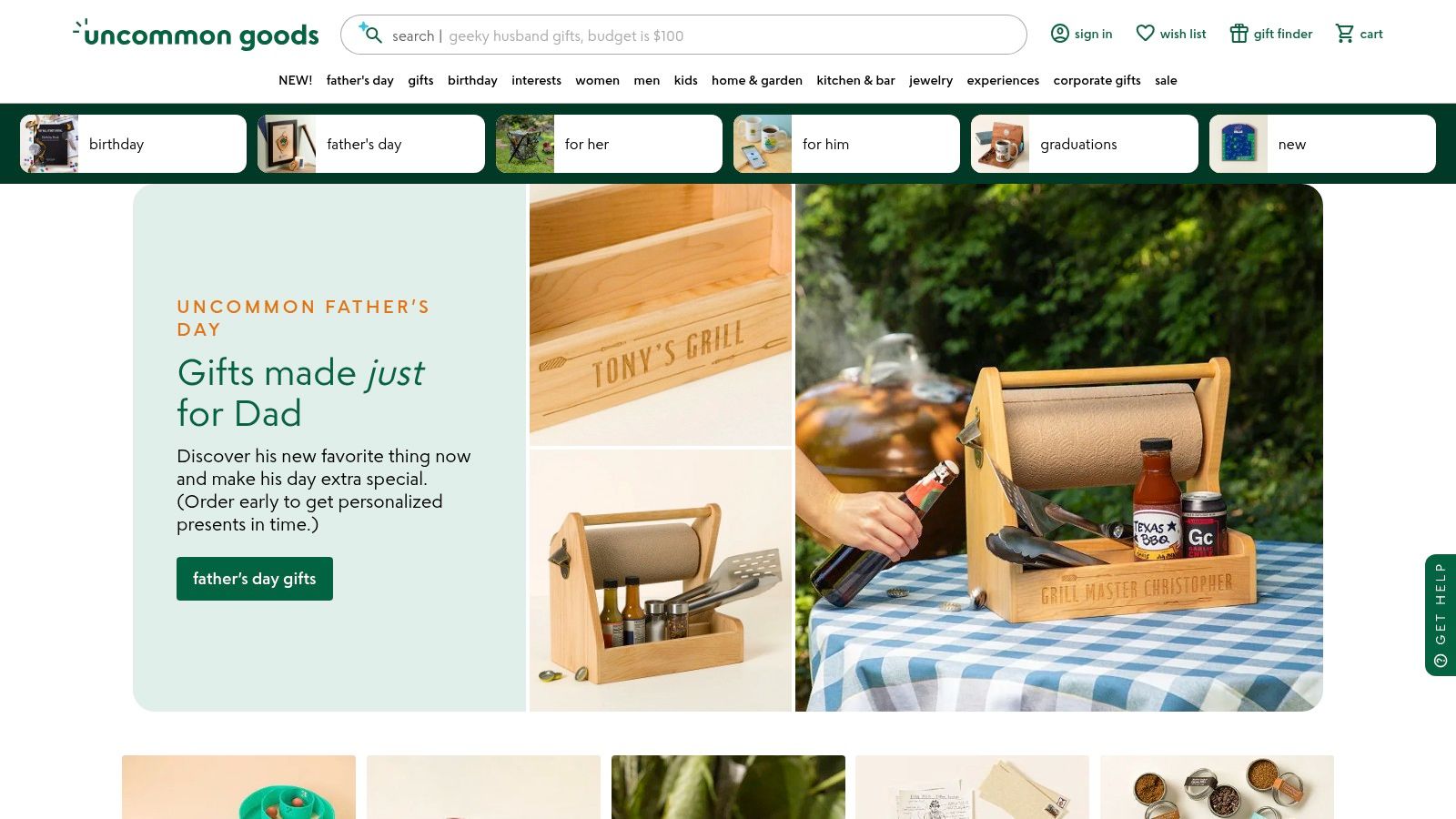
The advantage here is curation. Amazon gives you everything. Uncommon Goods gives you a tighter, better-edited selection, which is exactly what helps in a coworker exchange. You can sort by budget, browse by interest, and find gifts that feel distinctive without forcing you to scroll through pages of junk.
That makes it especially useful for white elephant exchanges, under-the-limit Secret Santa gifts, and mixed office groups where you need broad appeal. The goal is novelty with a point. A gift should be interesting enough to get a reaction and normal enough to fit on a desk, in a kitchen, or in a tote bag on the commute home.
Where it earns the price premium
Use Uncommon Goods if you want the platform to do some taste-filtering for you:
- Clear budget control: Helpful when your exchange cap is strict and everyone will notice if you overshoot.
- Office-safe originality: The catalog feels more creative than big-box retail without drifting into awkward territory.
- Strong browsing for vague recipients: Good option when you know the coworker's vibe but not their exact wish list.
- Better white elephant odds: Items often feel giftable right away, which matters in swaps where presentation and instant appeal count.
The main drawback is cost. Some products are priced above mass-market alternatives, and shipping can turn a “close enough” gift into a budget miss. Check the final total before you commit.
My recommendation is simple. If your exchange needs personality but not personalization, start here. Uncommon Goods works best as a discovery platform for polished, low-risk gifts that still feel like you put in real effort.
4. Etsy
You drew the coworker who mentions one oddly specific hobby, has a dog with a memorable name, or always jokes about the same spreadsheet disaster. That is Etsy territory.
Use Etsy when a generic gift will feel lazy and a fully custom gift box feels like too much work. It is one of the best platforms for turning a small clue into a gift that feels considered. The advantage is not just personalization. It is search depth. You can hunt by niche interest, role, style, budget, and custom options fast.
Best for clue-based gifting
Etsy works best when you have one useful detail and need the platform to do the rest. A department-specific joke, a pet reference, a favorite plant, a city obsession, a color they always wear. Those details are enough.
The smart play is to keep the gift specific but still office-safe. Personalized desk accessories, custom notebook covers, understated engraved items, and low-key funny products tend to work well. A good Etsy gift says, “I paid attention.” It does not say, “I know way too much about your personal life.”
A custom gift only works if it reflects something the coworker likes, not something you think is funny.
How to use Etsy well
Etsy rewards good filtering and punishes rushed buying. Seller quality varies. Production times vary. Customization can turn a simple order into a late one if you do not check the details.
Use this approach:
- Start with the exchange rule: If the budget is tight or the office is formal, filter for simple custom items first.
- Read recent reviews: Look for comments about print quality, packaging, and whether the item matched the photos.
- Check processing time before shipping time: Custom orders often take longer to make than to mail.
- Message the seller if timing is close: A quick response is a good sign. No response is a warning.
- Keep the joke broad enough for work: Funny is good. Embarrassing is not.
This is also a strong platform for Secret Santa situations where you know just enough to be dangerous. Etsy helps you convert scraps of information into a gift that feels chosen, not grabbed at checkout.
My recommendation is simple. Use Etsy when the exchange rewards thoughtfulness and you have one clear clue to work with. If you want a platform that helps you find the right version of a personal gift, not just another safe default, Etsy earns its spot on this list.
5. Greetabl
A decent gift can feel much better when it arrives well. That's why Greetabl works. It turns a small present into a polished, personal desk-side surprise without pushing into overly sentimental territory.
If your coworker is remote, based in another office, or not someone you are going to hand a wrapped box to in person, Greetabl solves the presentation problem neatly.
The best remote-friendly presentation upgrade
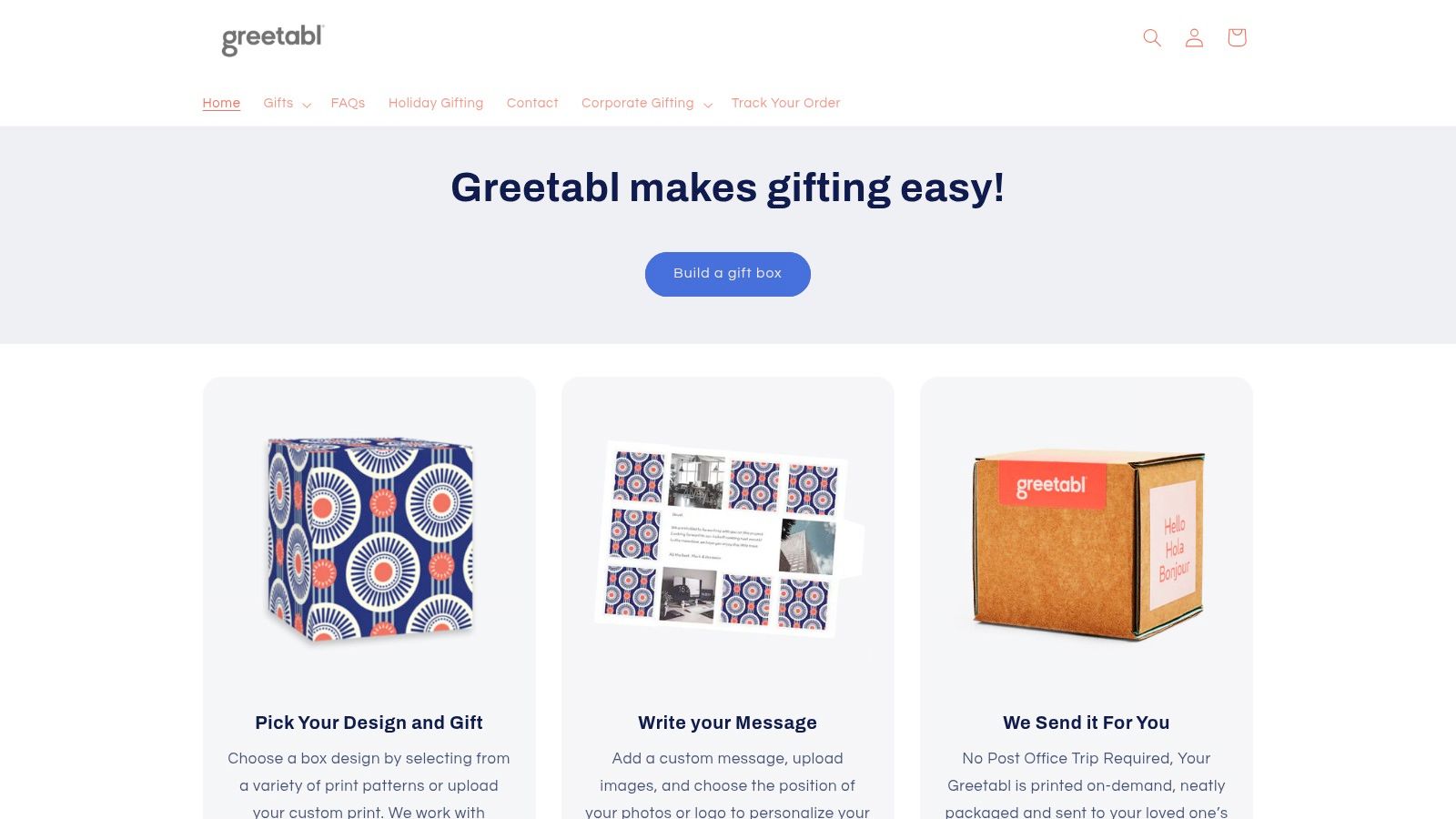
Greetabl lets you build a small gift box with custom text, uploaded photos, and a compact item inside. The flow is guided, which is useful if you don't want to source a gift, write a message, and package everything separately.
It's a good answer for hybrid teams because logistics matter more than ever. Many office gift exchange lists still assume everyone can meet in person and swap wrapped presents across a conference table. That leaves a gap for remote teams dealing with shipping delays, address collection, and uneven access to local stores, a problem highlighted in Indeed's discussion of work gift exchange ideas for distributed teams.
When Greetabl beats a standard gift
Greetabl is best when the emotional value comes from the format as much as the object. The unboxing feels deliberate, and that can make a modest gift feel warmer and better considered.
Use it when:
- You're sending to a remote coworker: Better than mailing a generic package.
- You want personal but not too personal: A short custom note does the work.
- You're handling small team sends: Business tools help with address uploads and batch sending.
The main limitation is size. Greetabl is built for small, compact gifts, not large or premium items. Final cost also depends on the box design, selected item, and shipping.
For office gifting, though, that restraint is often a plus. Smaller, tidy gifts usually fit workplace norms better than oversized “wow” presents.
6. Sugarwish
You drew a coworker you barely know, the budget is fixed, and you do not want to guess wrong on snacks, scents, or personal taste. Use Sugarwish.
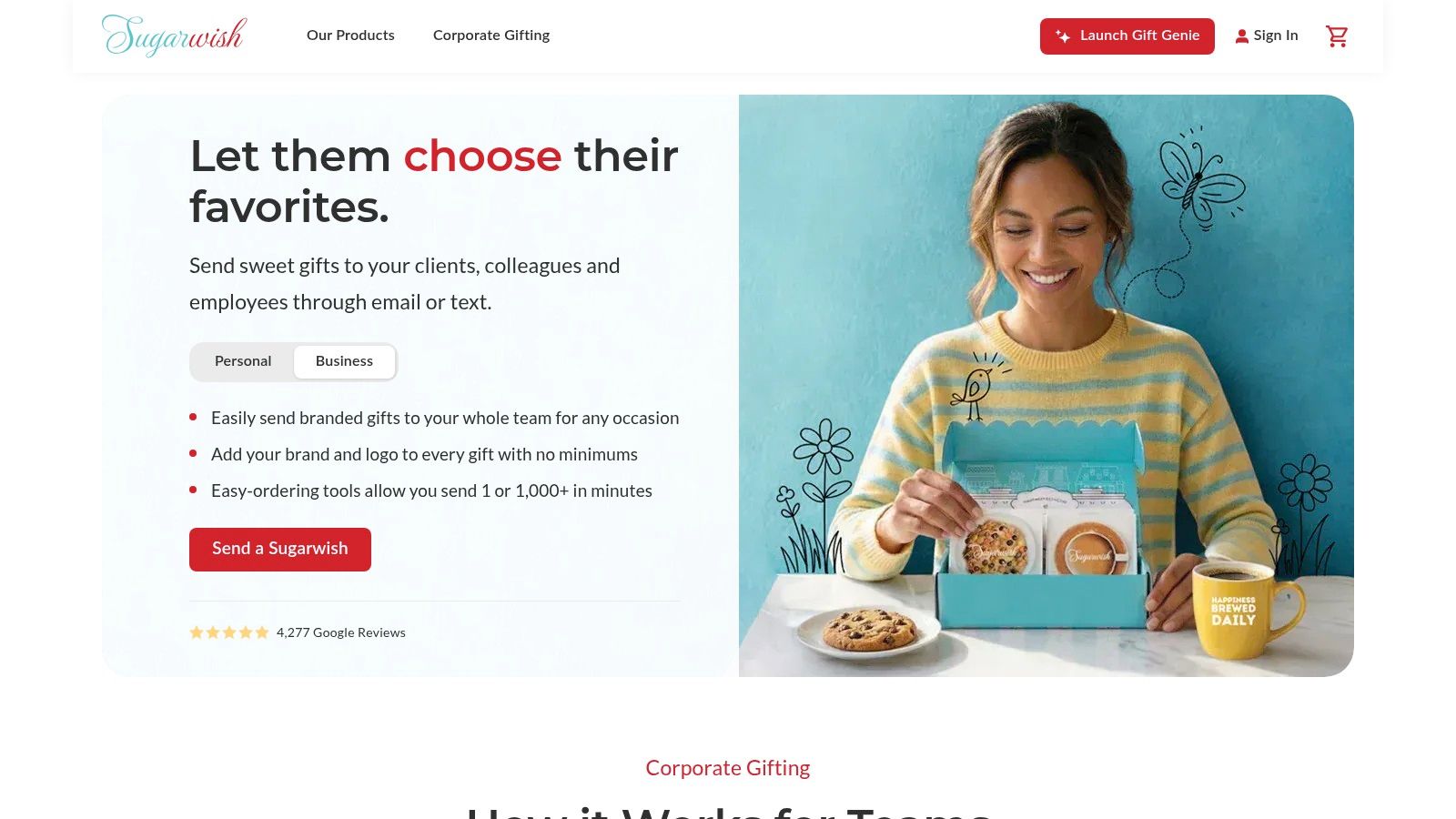
Sugarwish is one of the smartest platforms for coworker gift exchange ideas because it solves the biggest office gifting problem: bad guesses. You set the gift level. The recipient chooses what they want from categories like sweets, snacks, coffee, tea, or spa items, then enters the shipping details themselves.
The best pick when choice matters more than surprise
Sugarwish works best when your exchange needs less personality and more accuracy. That makes it a strong option for Secret Santa groups with limited familiarity, distributed teams, and departments with a wide mix of preferences.
It also hits a useful middle ground. A standard gift card can feel lazy. A fully chosen physical gift can miss badly. Sugarwish gives you the structure of a real gift with enough recipient choice to avoid the usual mistakes.
Why it works for office exchanges
Coworker gifts get messy fast when food restrictions, scent sensitivity, religious considerations, or plain personal boundaries are in play. Choice-first gifting handles that better than trying to decode someone's personality from two Slack messages and one team lunch.
That broader etiquette point is reflected in workplace gift exchange etiquette guidance from LGC Associates, which favors safer, more inclusive gift selection.
Choice-based gifting is often the best answer when you don't know the coworker well enough to personalize confidently.
The downside is simple. The recipient has to redeem the gift, so timing depends on them taking that extra step. Sugarwish can also cost more per gift than building a small item yourself. Still, if your priority is reducing risk and making the exchange easy to manage, this is one of the best platforms on the list.
7. Knock Knock
Not every exchange needs a meaningful keepsake. Sometimes you need a funny, useful, office-friendly gift that fits a low cap and gets a quick laugh. That's Knock Knock.
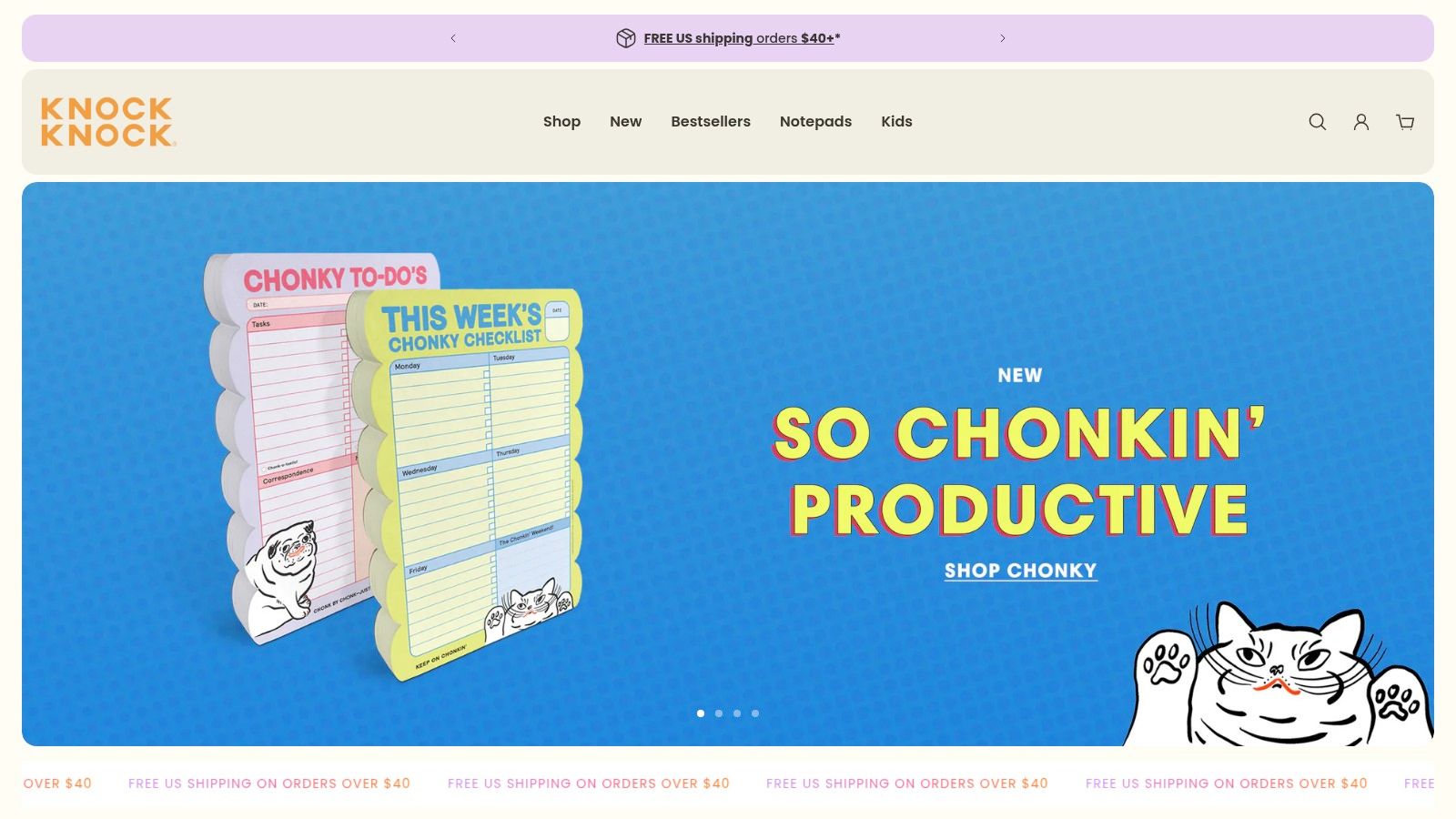
This is the best pick on the list for small-budget swaps, white elephant rounds that still need to stay workplace-safe, and backup gifts when you forgot the exchange was this week.
Best for low budgets and white elephant energy
Knock Knock specializes in witty notepads, sticky notes, planners, and desk accessories. These are easy gifts because they're functional, light, and usually easy to bundle into something that feels complete.
This kind of practical gifting also lines up with what people already expect to spend in coworker contexts. The same BusinessWire holiday gifting survey noted that Americans expected to spend an average of $37 on colleagues and coworkers during the holiday season, while adults ages 35 to 44 planned to spend about $71 on coworkers. I'm not repeating the link here because it appeared earlier, but the takeaway is clear: coworker gifting is mainstream, and practical spend-conscious gifts fit the norm.
What to buy from Knock Knock
Knock Knock is strongest when you keep the gift simple and useful.
Good picks include:
- To-do pads: Easy win for almost any desk worker.
- Planner-style notepads: Practical, broad appeal.
- Sticky notes with humor: Good for white elephant or casual teams.
- Bundled paper goods: Helps a small gift feel more substantial.
The caution here is tone. Humor is subjective, so read the product copy before you order and ask yourself whether it's funny in your office, not just funny on the page. Also, if you want a keepsake or heavy personalization, this isn't the right brand.
For inexpensive, low-stress gifting, though, Knock Knock is exactly the kind of site that saves the day.
Coworker Gift Exchange: 7-Option Comparison
| Item | 🔄 Implementation complexity | ⚡ Resource requirements | ⭐ Expected outcomes | 💡 Ideal use cases | 📊 Key advantages |
|---|---|---|---|---|---|
| Govava | 🔄 Moderate, AI + live chat interface with simple onboarding | ⚡ Low user effort; relies on internet, app/web and retailer APIs | ⭐ High personalization and potential savings when coupons/inventory align | 💡 Busy, deal‑conscious shoppers needing fast, personalized gifts | 📊 Connects to 8,000+ retailers, live Gift‑Chat, per‑recipient Gift‑Cart |
| Elfster | 🔄 Low, organizer setup for draws; participants create accounts | ⚡ Minimal, web/mobile access; purchases occur at external retailers | ⭐ Effective at automating pairing and event coordination | 💡 Office/team Secret Santa and organized group exchanges | 📊 Automated draws, wish lists, exclusions, reminders, mobile apps |
| Uncommon Goods | 🔄 Low, browse, personalize, and purchase via marketplace | ⚡ Moderate, item costs and shipping can affect budgets | ⭐ High, curated, novel, office‑appropriate gifts | 💡 Finding unique coworker gifts or curated corporate presents | 📊 Curated selection, personalization, B Corp sourcing, corporate support |
| Etsy | 🔄 Low, search and buy; custom orders may require seller coordination | ⚡ Variable, many low‑cost options; check lead times and reviews | ⭐ Very high potential for personalized, niche gifts on a budget | 💡 Personalized or inside‑joke gifts under typical exchange caps | 📊 Massive selection, deep personalization, price filters and reviews |
| Greetabl | 🔄 Low, guided build flow for photo‑personalized gift boxes | ⚡ Moderate, box price + shipping; business tools for teams | ⭐ Good, highly personal presentation suitable for workplaces | 💡 Desk‑friendly surprises, remote coworker gifts, small team sends | 📊 Photo boxes, quick turnaround (1–2 days), address uploads/automation |
| Sugarwish | 🔄 Low, sender picks tier; recipient chooses items via e‑card | ⚡ Low, digital send; physical delivery depends on recipient action | ⭐ Reliable, lowers gift‑mismatch risk through recipient choice | 💡 Last‑minute gifts and mixed‑preference employee exchanges | 📊 Recipient‑choice format, clear size tiers, convenient digital delivery |
| Knock Knock | 🔄 Very low, direct buy with minimal setup | ⚡ Low, inexpensive items, easy to bulk or bundle | ⭐ Good, practical, humorous desk items with broad appeal | 💡 Low‑budget ($7–$15) coworker gifts and white‑elephant swaps | 📊 Inexpensive, usable desk goods, frequent promotions and multi‑buys |
Beyond the Platform Gift Exchange Etiquette & Tips
Finding the right platform is only half the job. The other half is making sure the exchange feels fair, easy, and comfortable for everyone involved.
Start by locking down the rules early. Confirm the spending cap, the exchange format, and whether this is Secret Santa, white elephant, or a simple direct swap. If people don't know the budget or whether gag gifts are allowed, they'll either overspend, under-buy, or bring something that throws off the whole event.
Respect the budget exactly. Don't turn a modest exchange into a weird contest by showing up with something obviously over the cap, and don't phone it in with something that looks like a checkout-lane add-on. A good office gift says, “I followed the rules and put in some thought.”
Presentation matters more than people admit. A simple gift bag, tissue paper, or neat box makes even a practical gift feel intentional. That aligns with the broader lesson from workplace gift research: how a gift is framed and perceived can matter a lot, not just the raw dollar value.
A few rules make almost every exchange better:
- Clarify the theme: “Desk essentials,” “local treats,” or “useful under the cap” helps people shop better.
- Keep it workplace-safe: Avoid highly personal, romantic, political, or body-related gifts.
- Use preference signals: Wish lists, anonymous questions, or recipient-choice tools reduce awkward misses.
- Think about delivery: For remote teams, favor digital, ship-direct, or recipient-confirmed options.
If you're stuck between options, go with one of three lanes. Consumable, practical, or choice-based. Good coffee, gourmet snacks, a well-chosen desk item, or a curated recipient-choice gift all tend to work because they don't create clutter or force the recipient to fake enthusiasm.
For hybrid teams, simplify the process even more. Don't design an exchange that assumes everyone can attend in person, carry gifts home, or receive packages easily at the office. The cleanest setups for distributed teams are usually digital coordination plus direct shipping, or platforms where the recipient confirms delivery details themselves.
The best coworker gift exchange ideas aren't about finding the most creative object in the universe. They're about reducing friction while still making someone feel seen. If you choose the right platform and stick to basic office etiquette, the whole thing gets much easier.
And that's the actual goal. Less gifting stress, fewer awkward surprises, and a better chance your colleague opens the gift and thinks, “Okay, they nailed it.”
If you want the quickest way to go from vague coworker profile to a gift that fits, try Govava. It's especially good when you're short on time, working within a budget, or shopping for someone you don't know well enough to freestyle.